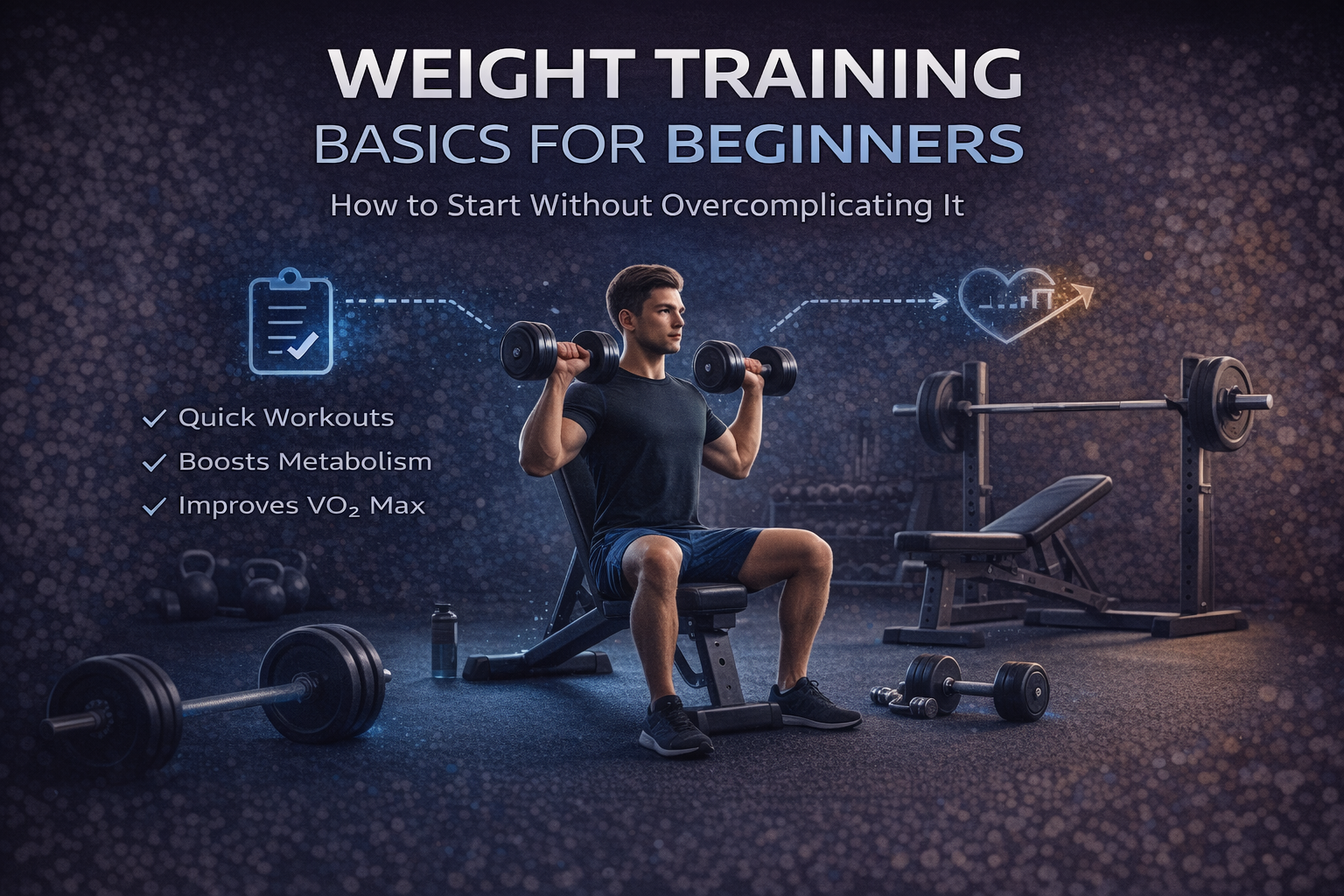
The fitness industry makes resistance training look complicated. Dozens of programs, hundreds of exercises, conflicting advice about frequency and volume and periodization. Most of this complexity is unnecessary for someone starting out. The principles that drive results in the gym are relatively simple, and the most important thing a beginner can do is start and stay consistent, not find the perfect program.
This article cuts through the noise and gives beginners a clear, practical framework for getting started.
The Principle Behind Everything
Resistance training works through a principle called progressive overload. The body adapts to the demands placed on it. If you consistently challenge your muscles with loads and volumes they are not currently adapted to handle, they respond by getting stronger and larger. If you consistently do the same workout with the same weights indefinitely, adaptation plateaus.
Progressive overload simply means gradually increasing the challenge over time: more weight, more reps, more sets, less rest, better technique. For beginners, almost any form of progressive overload produces results because the starting point is so low relative to the body's adaptation capacity. This is called the beginner advantage; you get results faster and from less stimulus than at any other training stage.
How Often to Train
For beginners, 2–3 resistance training sessions per week is sufficient to produce meaningful and rapid adaptation. More frequent training is not required, and the recovery demands of weight training are real, especially early in training when the nervous system and connective tissues are adapting alongside the muscles.
Full-body sessions 3 days per week (e.g., Monday/Wednesday/Friday) work well for beginners. They allow adequate frequency for each muscle group, manageable session length, and built-in recovery days.
What to Train
A beginner program should include the major movement patterns, not an exhaustive list of individual exercises:
Squat pattern: goblet squat, bodyweight squat, leg press. Trains the quads, glutes, hamstrings, and core.
Hip hinge pattern: Romanian deadlift, trap bar deadlift, kettlebell deadlift. Trains the posterior chain: hamstrings, glutes, lower back.
Horizontal push: push-up, dumbbell bench press, machine chest press. Trains the chest, shoulders, and triceps.
Horizontal pull: seated row, dumbbell row, cable row. Trains the upper back and biceps.
Vertical push: dumbbell overhead press, machine shoulder press. Trains the shoulders and triceps.
Vertical pull: lat pulldown, assisted pull-up. Trains the lats and biceps.
One to two exercises per pattern, 2–3 sets each, is enough for a complete beginner full-body session. Total workout time: 45–60 minutes.
Beginners gain strength faster than any other training population. The first 6–12 months of consistent resistance training produce more relative strength gain than any subsequent phase. You do not need a sophisticated program; you need consistency and progressive load.
Sets, Reps, and Load
For beginners, a rep range of 8–15 works well. It is safe enough to learn movement patterns without excessive load, and it provides sufficient mechanical tension for meaningful adaptation. Start with a load that allows 10–12 quality reps while leaving 2–3 reps "in the tank": meaning you could have done more but chose not to.
Each week, aim to do something slightly more, one more rep, a slightly heavier weight, in at least some of your exercises. This is progressive overload in practice.
Technique Comes First
Injury prevention starts with learning movement patterns correctly before adding significant load. For most beginner-friendly exercises, this does not require extensive coaching, but it does require patience. Start lighter than you think you need to. Learn the movement. Then add load.
Machines are often more beginner-appropriate than free weights, not because they are superior, but because they constrain the movement path, reducing technique error while the nervous system learns the pattern. Free weights become more useful as technique improves.
What to Ignore (For Now)
Advanced programming concepts, periodization, deloads, muscle fiber type training, tempo prescriptions, post-activation potentiation, are not relevant for beginners. They matter at higher training levels. At the beginner stage, they are more likely to create decision paralysis than results.
Similarly, the specific exercises you choose matter far less than consistently training the movement patterns with progressive load. Goblet squat versus barbell back squat? For a beginner, either works. Pick the one you can execute safely and progress it.
Bottom Line
Start with 2–3 full-body sessions per week. Train the major movement patterns. Use a rep range of 8–15. Add small amounts of load or reps over time. Prioritize technique over weight. Be consistent. That is 95% of what matters in the first year of training. Everything else is refinement that can be addressed once the foundation is in place.