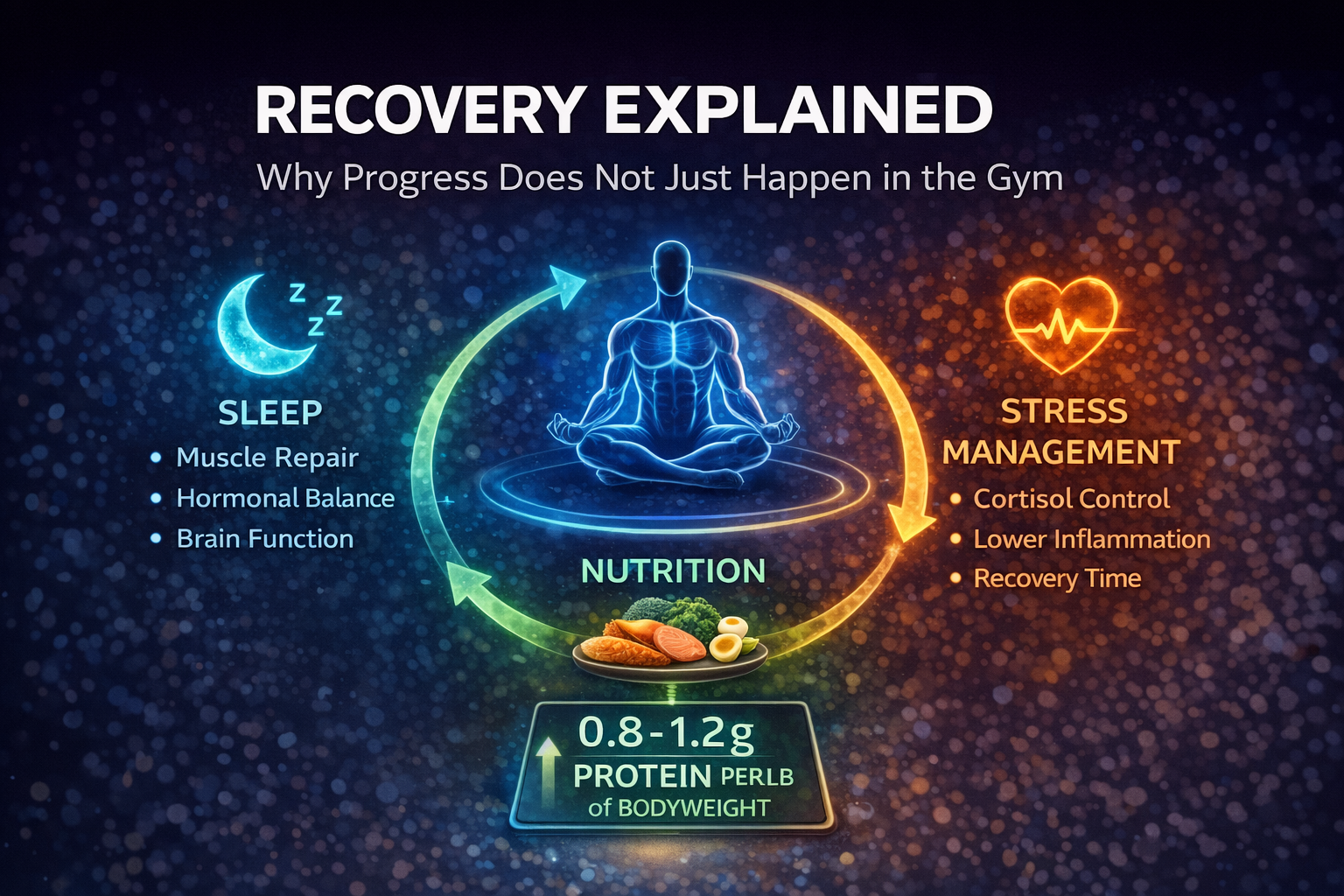
Training is not where you get stronger or leaner. Training is where you create the conditions for those changes to happen. The adaptation, the actual increase in muscle size, strength, endurance, and metabolic capacity, occurs during recovery. This distinction matters because most people optimize their training and pay minimal attention to the environment in which adaptation is supposed to take place.
What Recovery Actually Is
Recovery is not simply rest. It is an active, complex biological process involving multiple systems. After training, the body initiates a cascade of repair and adaptation responses:
Muscle protein synthesis (MPS) increases in response to the mechanical stress of training, rebuilding damaged muscle fibers and adding new contractile protein, provided amino acid availability is sufficient.
Glycogen resynthesis replenishes the muscle and liver glycogen stores depleted during training, restoring fuel availability for subsequent sessions.
Inflammatory and immune responses manage tissue damage, clear cellular debris, and initiate repair cascades. This process is necessary; blunting it entirely (e.g., with excessive anti-inflammatory medication post-exercise) may impair adaptation.
Hormonal rebalancing occurs as cortisol levels drop, testosterone rises, and growth hormone is released, particularly during sleep, creating an anabolic environment.
What Slows Recovery
Several factors are well-documented to impair recovery:
Insufficient sleep: Growth hormone secretion occurs primarily during deep sleep. Muscle protein synthesis is elevated during sleep. Cognitive and neuromuscular recovery both depend heavily on sleep quality and duration. This is covered in more depth in the Sleep and Stress article in this series.
Low protein intake: Without adequate amino acids, muscle protein synthesis is substrate-limited. You can train correctly, sleep well, and manage stress, but if protein is chronically low, adaptation will be blunted.
Calorie restriction: Significant calorie deficits reduce the anabolic signaling environment. Fat loss and muscle growth are not mutually exclusive, but aggressive restriction suppresses the hormonal and substrate conditions that favor recovery and adaptation.
High training volume without progression: More training is not always better. Chronic overreaching, training at a volume the body cannot recover from, accumulates fatigue, suppresses hormones, and eventually impairs performance and health.
Chronic stress: Elevated cortisol from life stress is physiologically indistinguishable from the cortisol response to intense training. The body does not separate work-related stress from training stress; it accumulates in the same recovery budget.
Recovery capacity is a finite resource. Your body does not distinguish between the stress of a hard training session and the stress of a difficult week at work. Both draw from the same pool. Plan your training load accordingly.
Active vs. Passive Recovery
Passive recovery, complete rest, is appropriate when the body is significantly fatigued, during planned deload weeks, or during injury. For most training days, however, active recovery is superior: low-intensity movement that promotes blood flow, reduces perceived soreness, and maintains movement patterns without adding meaningful stress to the recovery system.
Walking, easy cycling, swimming, mobility work, and low-intensity stretching all qualify as active recovery. The intensity should be low enough that it leaves you feeling better afterward, not more fatigued.
Monitoring Recovery
Practical recovery monitoring does not require expensive technology. Useful indicators include: morning resting heart rate (elevated HRV and resting HR can signal accumulated fatigue), training performance (consistent decline over multiple sessions suggests insufficient recovery), sleep quality and energy levels, and subjective readiness. These signals, taken together, give a reasonable picture of recovery status.
Bottom Line
Training creates the signal. Recovery is where the adaptation happens. Neglecting recovery while adding more training is like repeatedly writing to a file without ever saving it. Sleep, nutrition, stress management, and appropriately programmed training volume are the environment in which results are built, not the training session itself.