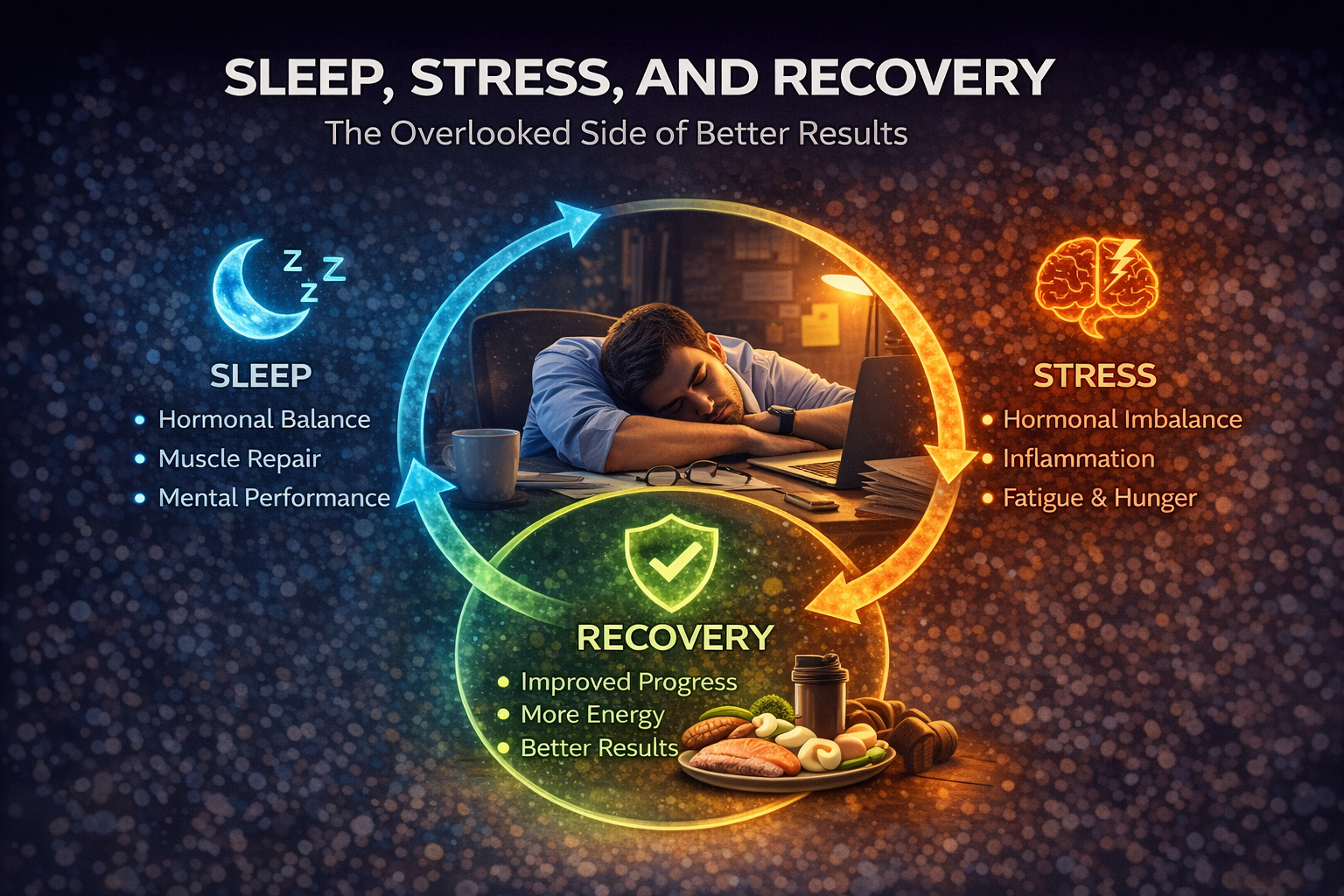
Ask most people what drives their results in the gym, and they will describe their training program. Ask what holds them back, and they will point to their diet. Rarely does anyone lead with sleep or stress, even though the research consistently identifies these as two of the most powerful variables affecting body composition, performance, and long-term health.
Why Sleep Is a Body Composition Variable
Sleep is not merely the absence of wakefulness. It is an active, highly regulated biological state during which some of the most important recovery and adaptation processes in the body take place.
Growth hormone release occurs primarily during the early stages of deep sleep. Growth hormone is critical for muscle repair, fat metabolism, and tissue recovery. Consistently poor sleep significantly reduces nocturnal growth hormone secretion.
Muscle protein synthesis continues during sleep and is the primary window for overnight recovery from training. Protein ingestion before sleep, particularly casein, has been shown to increase overnight MPS and improve next-day recovery markers.
Hormonal regulation is disrupted by poor sleep. Even one week of sleep restriction to 5–6 hours per night meaningfully reduces testosterone levels in men. Studies also show elevated cortisol, reduced leptin, and elevated ghrelin: the combination of which creates the hormonal environment most likely to drive fat gain and muscle loss.
Appetite and food choices are directly affected by sleep status. Sleep-deprived individuals consistently consume more calories, show greater preference for high-calorie, palatable foods, and demonstrate reduced self-regulatory capacity around eating. This is not a willpower issue; it is a neurological one, driven by changes in reward signaling in the prefrontal cortex and limbic system.
Improving sleep from 6 to 8 hours per night can have a measurable impact on body composition, performance, and appetite regulation, without changing a single thing about training or diet.
Stress and the Body Composition Connection
Chronic psychological stress elevates cortisol over an extended period. Cortisol serves important short-term functions; it mobilizes energy, heightens alertness, and prepares the body to respond to a perceived threat. In an acute context, it is valuable. As a chronic background state, it creates a number of downstream problems.
Muscle tissue: Chronically elevated cortisol is catabolic; it promotes the breakdown of muscle protein for use as fuel. This directly undermines the adaptation response from training.
Fat storage: Cortisol promotes fat storage, particularly visceral (abdominal) fat. Visceral fat is metabolically active in ways that worsen insulin sensitivity and increase inflammatory markers.
Testosterone suppression: Cortisol and testosterone compete for the same precursor hormone (pregnenolone). Chronic high cortisol diverts this precursor away from testosterone production: a phenomenon sometimes described as "pregnenolone steal."
Gut function: Chronic stress impairs digestive function, alters gut microbiome composition, and contributes to increased intestinal permeability, affecting nutrient absorption and systemic inflammation.
The Cumulative Stress Model
Your body processes all stressors, training, work, relationships, poor sleep, inadequate nutrition, as a single collective load. There is no compartmentalization. A person training hard while working 60-hour weeks, sleeping 5 hours a night, and managing significant personal stress is asking their body to adapt from a profoundly compromised baseline.
This is why training harder is not always the answer when results stall. Sometimes the most productive intervention is reducing total life stress, improving sleep quality, or managing training volume down to allow the recovery system to catch up.
Practical Sleep Improvements
Sleep hygiene improvements that consistently show benefit in research: consistent sleep and wake times seven days a week; avoiding blue light exposure (screens) 60–90 minutes before bed; keeping the sleep environment cool (around 65–68°F); avoiding alcohol within 2–3 hours of sleep (it suppresses REM and reduces sleep quality); and avoiding large meals and caffeine in the 4–6 hours before bed.
Bottom Line
Sleep and stress are not soft lifestyle variables; they are biological levers that directly regulate the hormonal environment in which your body either builds or breaks down. No training program or diet outcompetes chronic sleep deprivation and unmanaged stress. They are not afterthoughts. They are part of the foundation.