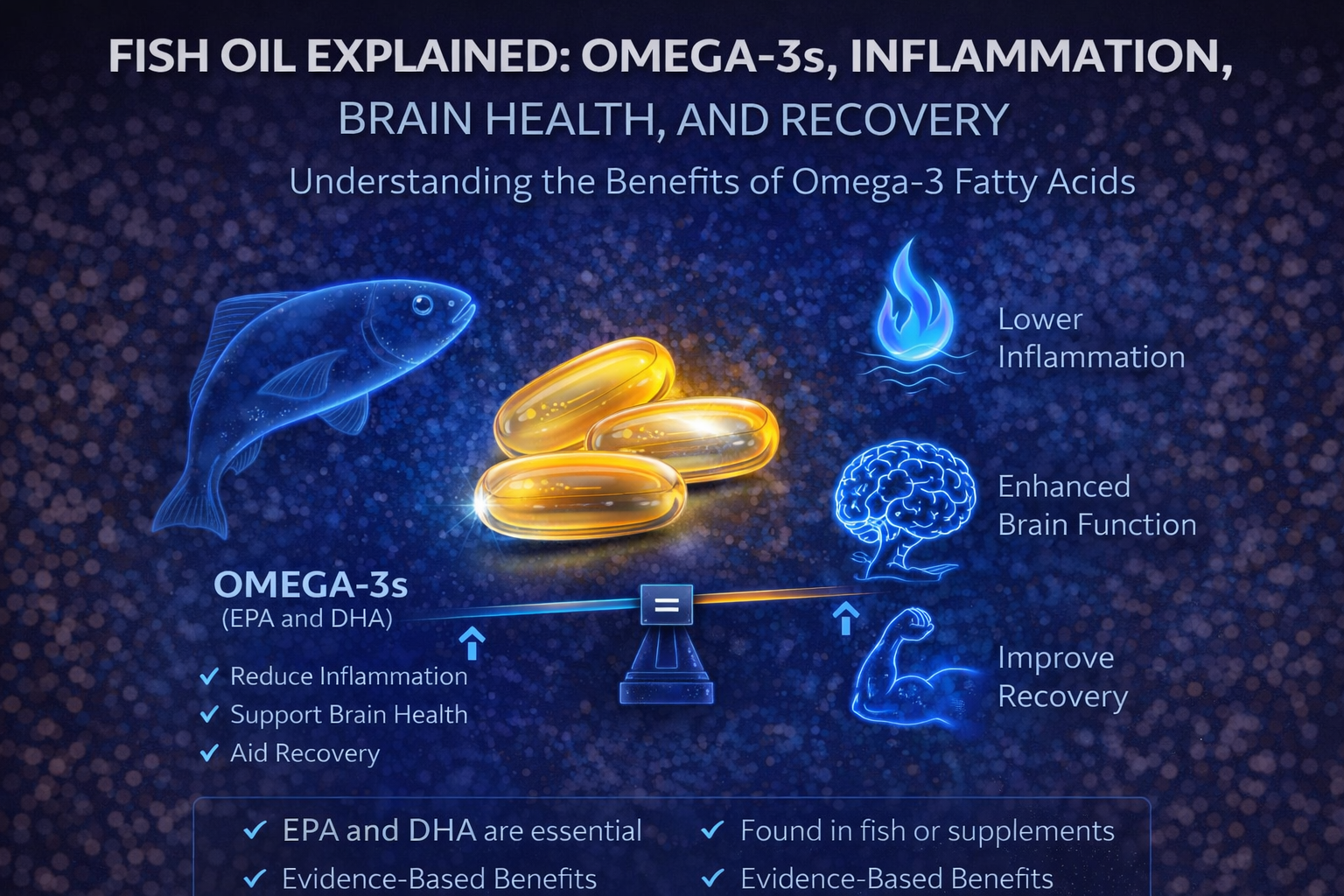
Fish oil is one of the most widely used supplements in the world, and unlike most of the supplement industry, the evidence base supporting its use is genuinely substantial. That said, it is not magic, and it matters significantly what you are using it for, what product you are buying, and how you are taking it. This article covers what omega-3s actually do and what the research supports.
What Omega-3 Fatty Acids Are
Omega-3s are a category of polyunsaturated fatty acids that the body cannot synthesize on its own, making them essential dietary components. The three primary forms are:
ALA (alpha-linolenic acid): found in plant sources like flaxseed, chia, and walnuts. The body can convert ALA to EPA and DHA, but the conversion rate is very low, typically under 5–10%.
EPA (eicosapentaenoic acid): found primarily in fatty fish and fish oil. Has the most robust evidence for cardiovascular and anti-inflammatory effects.
DHA (docosahexaenoic acid): also found in fatty fish and marine sources. The primary structural omega-3 in the brain and retina. Critical for neurological development and cognitive function.
Fish oil supplements contain EPA and DHA. Most plant-based omega-3 supplements contain ALA, which provides limited conversion to EPA and DHA in most people. Algae-based supplements are an exception: they provide DHA directly and are suitable for those avoiding animal products.
Omega-3s and Inflammation
One of the most well-supported roles of EPA and DHA is modulation of the inflammatory response. Omega-3s are incorporated into cell membranes and serve as precursors to anti-inflammatory signaling molecules called resolvins and protectins. They compete with omega-6 fatty acids (which are pro-inflammatory in excess) for enzymatic pathways, effectively shifting the balance toward a more anti-inflammatory state.
The modern diet is heavily weighted toward omega-6 fatty acids, found abundantly in vegetable oils and processed foods, creating a lopsided omega-6 to omega-3 ratio. Supplemental fish oil does not eliminate this imbalance but can meaningfully reduce it, particularly when combined with dietary changes.
Omega-3s and Brain Health
DHA is the most abundant fatty acid in the brain by dry weight. It is concentrated in neuronal cell membranes, where it supports membrane fluidity, synaptic signaling, and the integrity of the myelin sheath. Research consistently links higher DHA status with reduced rates of cognitive decline, better mood outcomes, and lower rates of depression.
Studies on supplemental DHA suggest benefit for mood, anxiety, and cognitive performance, particularly in populations with low baseline omega-3 intake. The evidence is strongest at doses in the range of 1–3 grams of combined EPA+DHA per day.
When evaluating fish oil products, look at the EPA+DHA content per serving, not just the total oil content. A 1,000 mg fish oil capsule may contain only 300 mg of actual EPA+DHA. Quality products disclose this clearly.
Omega-3s and Exercise Recovery
Research on fish oil and exercise recovery is encouraging. Several studies have found that omega-3 supplementation reduces delayed onset muscle soreness (DOMS), attenuates the inflammatory response to eccentric exercise, and may support muscle protein synthesis, particularly in older adults and individuals with low baseline omega-3 status. The effect is modest but consistent enough to be worth considering, especially for individuals training at high frequency.
Cardiovascular Effects
Fish oil has well-established effects on triglyceride reduction at higher doses (2–4 grams of EPA+DHA per day). Its effects on cardiovascular outcomes more broadly are more nuanced and dose-dependent. High-dose prescription omega-3 therapy has shown benefit in specific populations. For general health maintenance, a moderate dose supports a favorable lipid profile and inflammatory markers.
Quality Matters
Fish oil quality varies significantly between products. Key considerations: look for products that have been third-party tested for heavy metals (particularly mercury and PCBs); choose triglyceride form over ethyl ester form for better absorption; and store fish oil in the refrigerator after opening to slow oxidation. Rancid fish oil tastes unpleasant and provides reduced benefit.
Bottom Line
Fish oil is one of the few supplements with a meaningful, research-backed benefit profile across multiple domains: inflammation, brain health, cardiovascular markers, and potentially exercise recovery. For most people eating a typical diet low in fatty fish, supplemental EPA+DHA at 1–3 grams per day is a reasonable, well-supported addition. Quality and form matter: choose a product that discloses EPA+DHA content and has third-party testing.