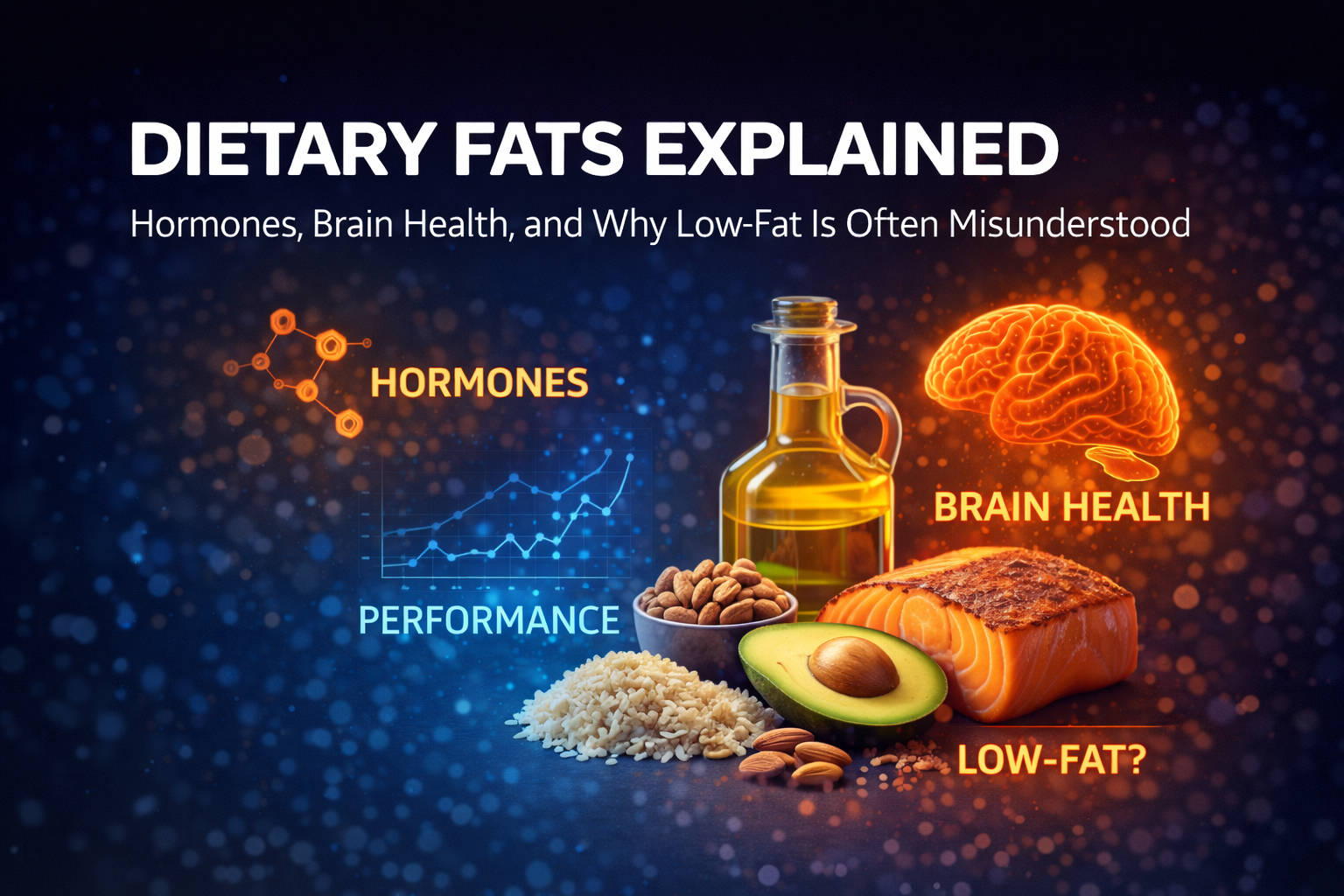
For roughly three decades, dietary fat was treated as the primary villain in the story of poor health and weight gain. Low-fat products flooded the market, public health guidelines warned against fat consumption, and the message was absorbed broadly by the population. The science has since moved on considerably, and understanding the actual role of dietary fat is essential for making informed nutritional choices.
What Dietary Fat Actually Is
Dietary fat is a macronutrient that provides 9 calories per gram: more than double the caloric density of protein or carbohydrates. Fats in the body serve as structural components of cell membranes, carriers for fat-soluble vitamins (A, D, E, K), precursors to hormones, and a long-duration energy source.
There are several categories of dietary fat, distinguished by their molecular structure:
Saturated fats: found in animal products, coconut oil, and dairy. Solid at room temperature. Long debated in cardiovascular research; the relationship with heart disease is more nuanced than older guidelines suggested.
Monounsaturated fats (MUFAs): found in olive oil, avocados, and certain nuts. Associated with positive cardiovascular and metabolic markers in most research.
Polyunsaturated fats (PUFAs): including omega-3 and omega-6 fatty acids. Essential fats the body cannot produce. Critical for brain function, inflammation regulation, and cardiovascular health.
Trans fats: industrially produced through partial hydrogenation. Linked to increased cardiovascular risk. Largely removed from the food supply in many countries due to regulatory action.
Fat and Hormone Production
Dietary fat is required for the production of steroid hormones: including testosterone, estrogen, progesterone, and cortisol. All of these are synthesized from cholesterol, which itself comes partly from dietary fat and partly from the liver.
Very low-fat diets, particularly those dropping below 15–20% of total calories from fat, have been associated with reductions in testosterone and other sex hormones. This is not a theoretical concern; it has been observed in research on both athletes and general populations. Adequate fat intake is a physiological requirement, not an indulgence.
Fat and Brain Health
The brain is approximately 60% fat by dry weight. The structural integrity of neurons, the efficiency of synaptic transmission, and the formation of the myelin sheath that insulates nerve fibers all depend on fat, particularly long-chain omega-3 fatty acids like DHA.
DHA is the most abundant omega-3 in the brain. It is found primarily in fatty fish and marine sources, and to a lesser extent in algae-based supplements. Research consistently links higher DHA intake with better cognitive function, reduced rates of cognitive decline, and improved mood outcomes.
Dietary fat is not the cause of fat gain. Like all macronutrients, excess calories drive fat storage, not fat consumption on its own. Fat's high caloric density means it is easy to overconsume, but this is a context issue, not a chemical one.
Why Low-Fat Diets Often Backfire
When food manufacturers removed fat from products in the 1980s and 1990s, something had to replace the texture, palatability, and satiety that fat provides. In most cases, that replacement was sugar. Low-fat yogurt, low-fat crackers, and low-fat snack products became high in refined carbohydrates and no better, and often worse, for metabolic health than their full-fat counterparts.
Fat also slows gastric emptying and blunts post-meal blood sugar responses. Removing fat from meals often increases hunger and the glycemic impact of a meal, not decreases it.
What to Prioritize
Rather than avoiding fat, the more meaningful focus is on fat quality. Minimizing industrially processed trans fats, favoring unsaturated fat sources, and ensuring adequate omega-3 intake from fatty fish, walnuts, or quality supplements covers the most important bases for most people. There is no compelling reason to restrict total fat below 20–25% of total calories for a healthy individual.
Bottom Line
Dietary fat is not a threat to manage; it is a nutrient to understand. It is essential for hormonal health, brain function, cellular integrity, and fat-soluble vitamin absorption. Demonizing fat without understanding it leads to poor dietary decisions. Focus on quality, maintain adequate intake, and let total calorie balance handle body composition outcomes.