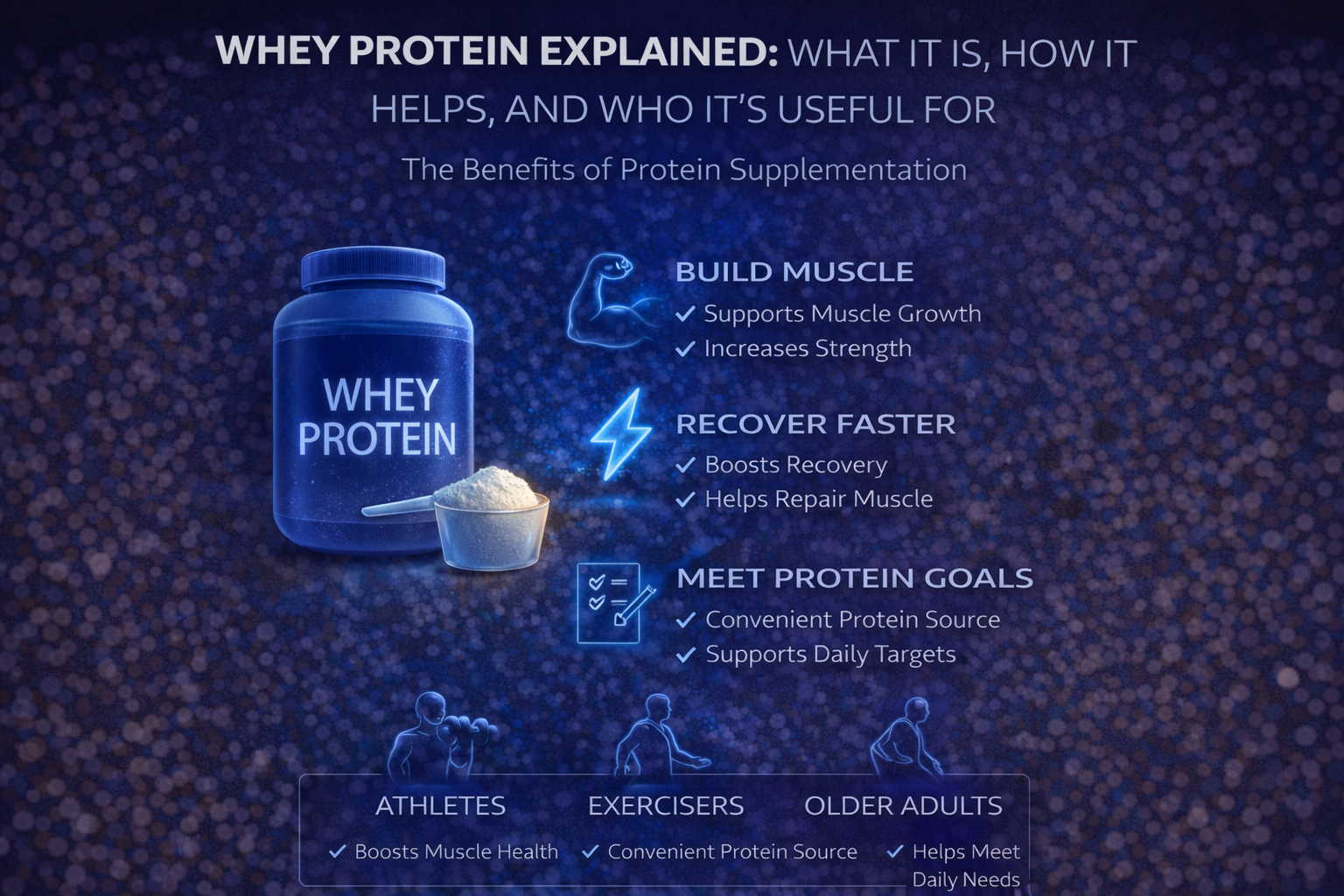
Whey protein has been a staple of fitness and sports nutrition for decades, long enough that the market has become cluttered with products ranging from excellent to deceptive. Understanding what whey actually is, what it does in the body, and when it makes sense to use it allows you to evaluate it rationally rather than relying on marketing claims.
What Whey Protein Is
Whey is a protein derived from milk. When milk is processed to make cheese, it separates into two components: casein (the solid curds) and whey (the liquid). The whey fraction is then filtered, concentrated, and dried to create whey protein powder.
There are three primary forms:
Whey concentrate: contains 70–80% protein by weight, with small amounts of lactose and fat remaining. Generally less expensive and retains more of the naturally occurring bioactive compounds from whey.
Whey isolate: processed further to remove most lactose and fat, resulting in approximately 90%+ protein content. Preferred by those with lactose sensitivity and useful when minimizing non-protein calories is a priority.
Whey hydrolysate: pre-digested (hydrolyzed) into smaller peptides, allowing for faster absorption. Higher cost, limited additional benefit for most people outside of clinical or very elite performance contexts.
Why Whey Is Particularly Effective for Muscle Protein Synthesis
Not all proteins are equal in their ability to stimulate muscle protein synthesis (MPS). Whey is consistently one of the highest-performing protein sources for this purpose, and the reason is primarily its leucine content.
Leucine is the amino acid most responsible for initiating the anabolic signaling cascade that triggers MPS. Whey contains approximately 10–12% leucine by weight: one of the highest concentrations of any protein source. Combined with its rapid digestion and absorption kinetics, whey creates a fast, robust leucine spike that effectively triggers MPS.
This characteristic makes whey particularly useful in two contexts: the post-training period, where rapid amino acid availability supports the elevated MPS response; and in meal contexts where food-based protein is difficult to reach adequate levels.
Whey protein does not create muscle. It provides the raw material and signaling stimulus for muscle protein synthesis, but only in combination with training that creates the demand for that synthesis and total dietary patterns that support recovery. Supplement, not substitute.
Who Benefits Most
People who consistently fall short of daily protein targets: whey is a convenient, cost-effective way to close the gap without adding significant calories from fat and carbohydrates.
Active individuals with high protein needs: those training regularly at significant volume may find whole food sources alone impractical to meet targets, and a post-training shake simplifies recovery nutrition.
Older adults: research shows that anabolic resistance (the blunted MPS response to protein) increases with age. Higher leucine content from whey may help overcome this resistance, making it particularly relevant for maintaining muscle mass in older populations.
Vegetarians and those with limited meat intake: whey provides a complete, high-quality protein source that may be difficult to replicate from plant-based whole foods without significant dietary planning.
Who May Not Need It
If whole food sources consistently cover your protein targets, and many people who plan their diet carefully can manage this, supplemental whey provides minimal additional benefit. It is a convenient tool, not a requirement. Those with dairy intolerance should consider casein-free alternatives (plant-based blends, pea protein) or whey isolate, which has minimal lactose.
What to Look For
Third-party testing (NSF, Informed Sport, Informed Choice) ensures what is on the label is what is in the product. Look for a product that clearly states grams of protein per serving, discloses the protein source, and does not use excessive fillers or proprietary blends to obscure the protein content. Concentrate and isolate are both effective; the choice depends on cost preference and lactose tolerance.
Bottom Line
Whey protein is a practical, well-researched supplement for individuals who train regularly and want a convenient way to support daily protein intake. Its leucine content and digestibility make it one of the most effective protein sources for stimulating MPS. It is not magic; it is food in a more portable form. Used in the right context, it earns its place in a well-structured nutrition plan.