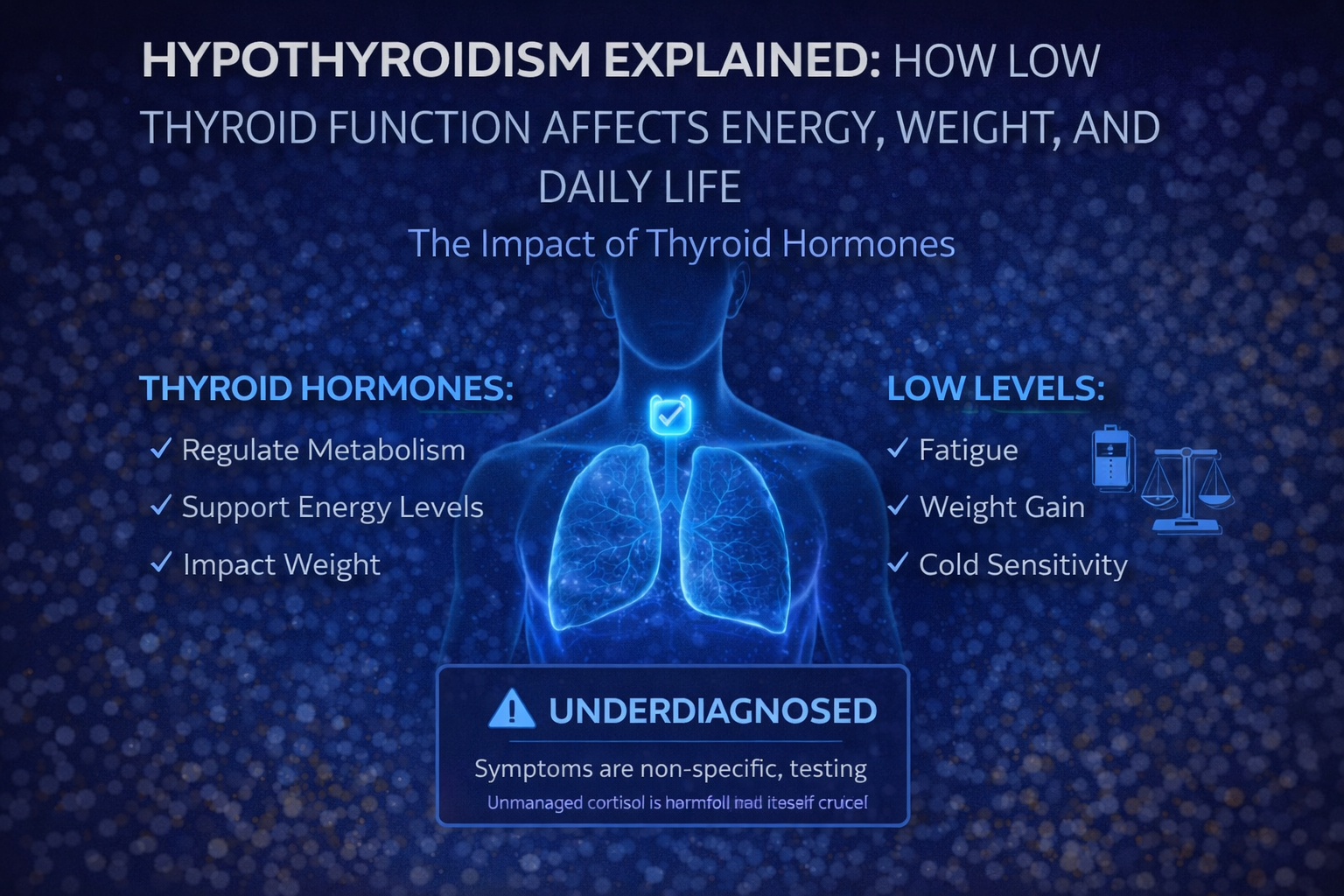
Hypothyroidism, the condition in which the thyroid gland produces insufficient thyroid hormone, is one of the most common endocrine disorders in the world, and one of the most frequently misunderstood. People either dismiss it as an excuse for poor results or assume their thyroid is the cause of every symptom they cannot otherwise explain. Neither approach leads anywhere useful.
This article explains what thyroid hormones actually do, how hypothyroidism affects the body, and what it means in the context of energy, weight management, and daily function.
What the Thyroid Does
The thyroid is a butterfly-shaped gland at the base of the neck. It produces two primary hormones: thyroxine (T4) and triiodothyronine (T3). T4 is the predominant secreted form; most of its biological activity comes after conversion to T3 in peripheral tissues.
Thyroid hormone regulates metabolic rate: specifically, how fast cells convert oxygen and calories into energy. It influences heart rate, body temperature, digestion, brain function, bone health, muscle function, and cholesterol metabolism. In short, it sets the metabolic pace for nearly every process in the body.
Thyroid hormone secretion is regulated by the pituitary gland via thyroid-stimulating hormone (TSH). When thyroid output is low, TSH rises in an attempt to stimulate more production. This is why TSH is the primary marker tested when evaluating thyroid function.
What Hypothyroidism Looks Like
Because thyroid hormone affects so many systems, hypothyroidism produces a broad and often frustrating symptom picture. The most common symptoms include:
Fatigue and low energy: often described as a bone-deep tiredness that sleep does not resolve. This is typically the most prominent complaint.
Weight gain or difficulty losing weight: a reduced metabolic rate means fewer calories are burned at rest. A suppressed thyroid may reduce BMR by several hundred calories per day in moderate-to-severe cases.
Cold intolerance: reduced thermogenesis makes people with hypothyroidism consistently feel colder than those around them.
Brain fog and cognitive slowing: difficulty concentrating, slowed thinking, and impaired memory are common, particularly in more pronounced cases.
Constipation, dry skin, hair loss, and low mood: each reflecting different downstream effects of reduced metabolic activity.
Hypothyroidism symptoms overlap significantly with those of depression, iron deficiency anemia, chronic fatigue syndrome, and overtraining syndrome. A blood test is the only reliable way to distinguish between them. Self-diagnosing without testing is not useful and often delays appropriate care.
Primary vs. Secondary Hypothyroidism
Most hypothyroidism (approximately 95%) is primary: meaning the thyroid gland itself is underperforming. The most common cause in developed countries is Hashimoto's thyroiditis, an autoimmune condition in which the immune system attacks thyroid tissue. Secondary hypothyroidism, caused by pituitary failure to produce adequate TSH, is much rarer.
Subclinical Hypothyroidism
Subclinical hypothyroidism refers to a state where TSH is elevated but T3 and T4 remain within normal ranges. This is a common and somewhat controversial area. Some individuals experience significant symptoms at TSH levels their physician may consider borderline. Others have elevated TSH without any symptoms at all. The decision to treat subclinical hypothyroidism is individualized and involves consideration of symptom burden, TSH level, and personal history.
Hypothyroidism and Body Composition
The relationship between hypothyroidism and weight is real, but often overstated. Untreated hypothyroidism can lower resting metabolic rate, impair fat oxidation, and promote water retention, contributing to weight gain. However, the calorie impact of even moderate hypothyroidism is generally in the range of 150–300 calories per day, not the 1,000+ calorie deficit people sometimes attribute to it.
Properly treated hypothyroidism, with appropriate thyroid hormone replacement, typically normalizes metabolic rate. Additional weight loss following treatment usually requires the same calorie and exercise management that drives weight loss in any other context. The thyroid is a piece of the picture, not the whole picture.
Bottom Line
Hypothyroidism is a legitimate medical condition with real effects on energy, body composition, and daily function. It is not an excuse, but it is also not a myth. If you experience persistent fatigue, unexplained weight changes, cold intolerance, or cognitive sluggishness, particularly in combination, getting your thyroid levels tested through a physician is a reasonable and relatively simple step.